
Beyond Entrepreneurship 2.0
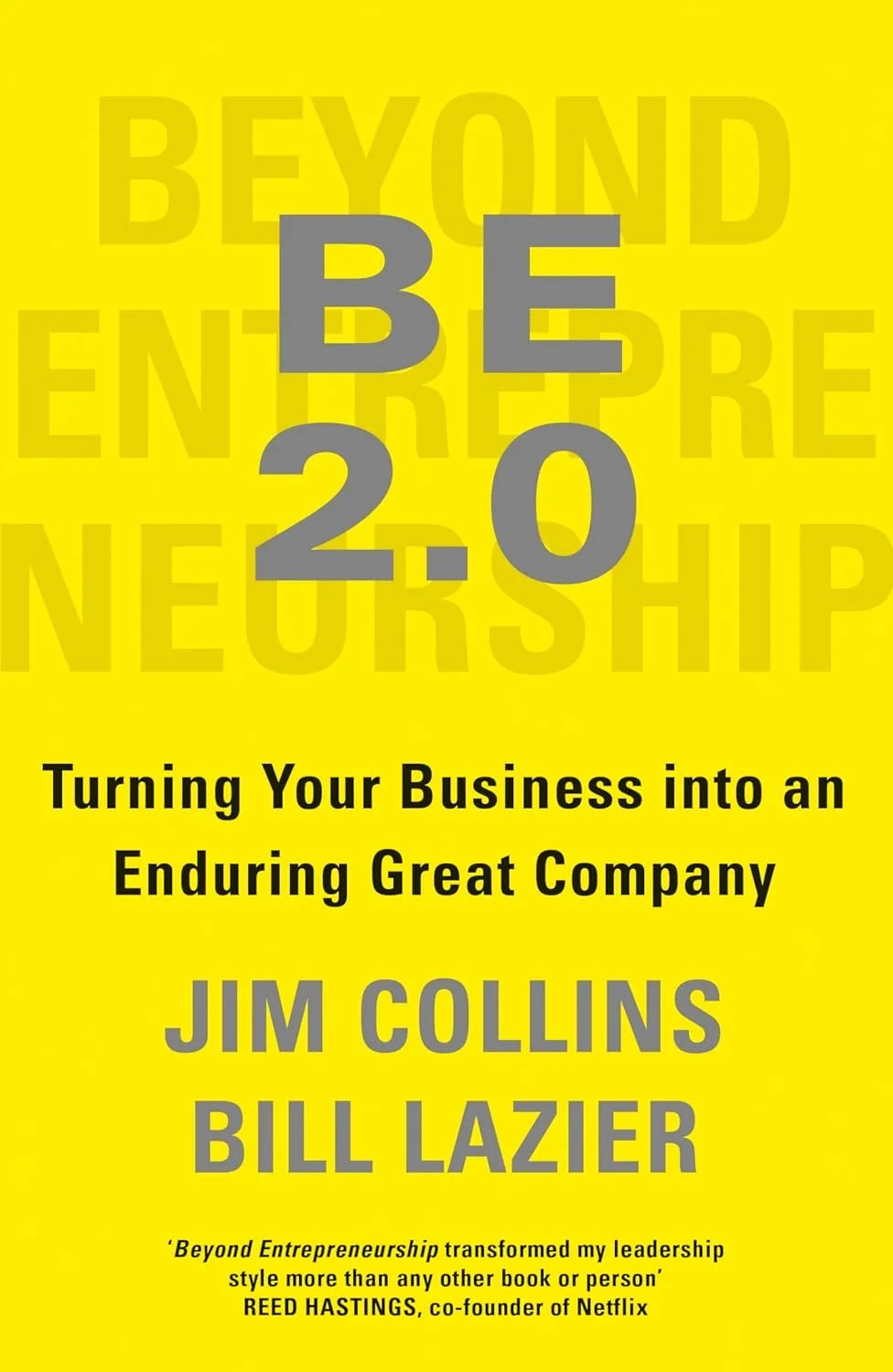
As a long-time Jim Collins fan, I'm slightly surprised it took me this long to get around to reading Beyond Entrepreneurship 2.0. As I worked through it, it became easy to see why Reed Hastings suggested it should be required reading for aspiring CEOs.
I'd actually go one step further as I think it's a book that anyone in an organisational leadership position would benefit from reading.
Originally published in the early 1990s, the updated 2.0 edition benefits from Collins' reflections three decades later. Rather than replacing the original ideas, the updates help to reinforce just how timeless many of the principles are. From leadership and vision to strategy and execution, it serves as a comprehensive playbook for building enduring organisations.
Whether you're leading an established company, founding a start-up or part of the leadership team within a growing organisation, there's something here that will challenge and strengthen your thinking.
I listened to the audiobook but, unsurprisingly, ordered the physical copy as well as there are several sections for highlighting and annotating if you’re that way inclined. I've also prepared copious notes already to include in future leadership discussions within the organisation I currently consult for.
Across roughly 300 pages, Collins and Bill Lazier provide practical guidance on leadership, organisational development and strategic thinking.
The section on vision is probably the one that resonated with me the most. Time and again I've seen how important it is not simply to create a compelling vision, but to communicate it in a way that genuinely empowers people and aligns an organisation behind a common direction.
The chapters covering strategy, innovation and tactical excellence are equally strong, with every chapter packing a punch as far as value delivered.
This is as much a book for the home library as it is for the office bookshelf.
A genuine masterclass in what makes organisations not only successful, but enduring.
Who's It For?
Whilst aspiring and existing CEOs will naturally gain a great deal from this book, I think its audience is far broader than that.
Anyone with leadership responsibilities, whether leading teams, departments or organisations, will find practical ideas they can apply immediately. It's equally valuable for those looking to develop into leadership positions, offering a framework for thinking about strategy, culture, vision and execution long before they're sitting in the CEO's chair.
Beyond individual development, I also think it's an excellent source of material for leadership teams looking to shape strategy, improve organisational effectiveness or build long-term capability.