
The Thinking Machine
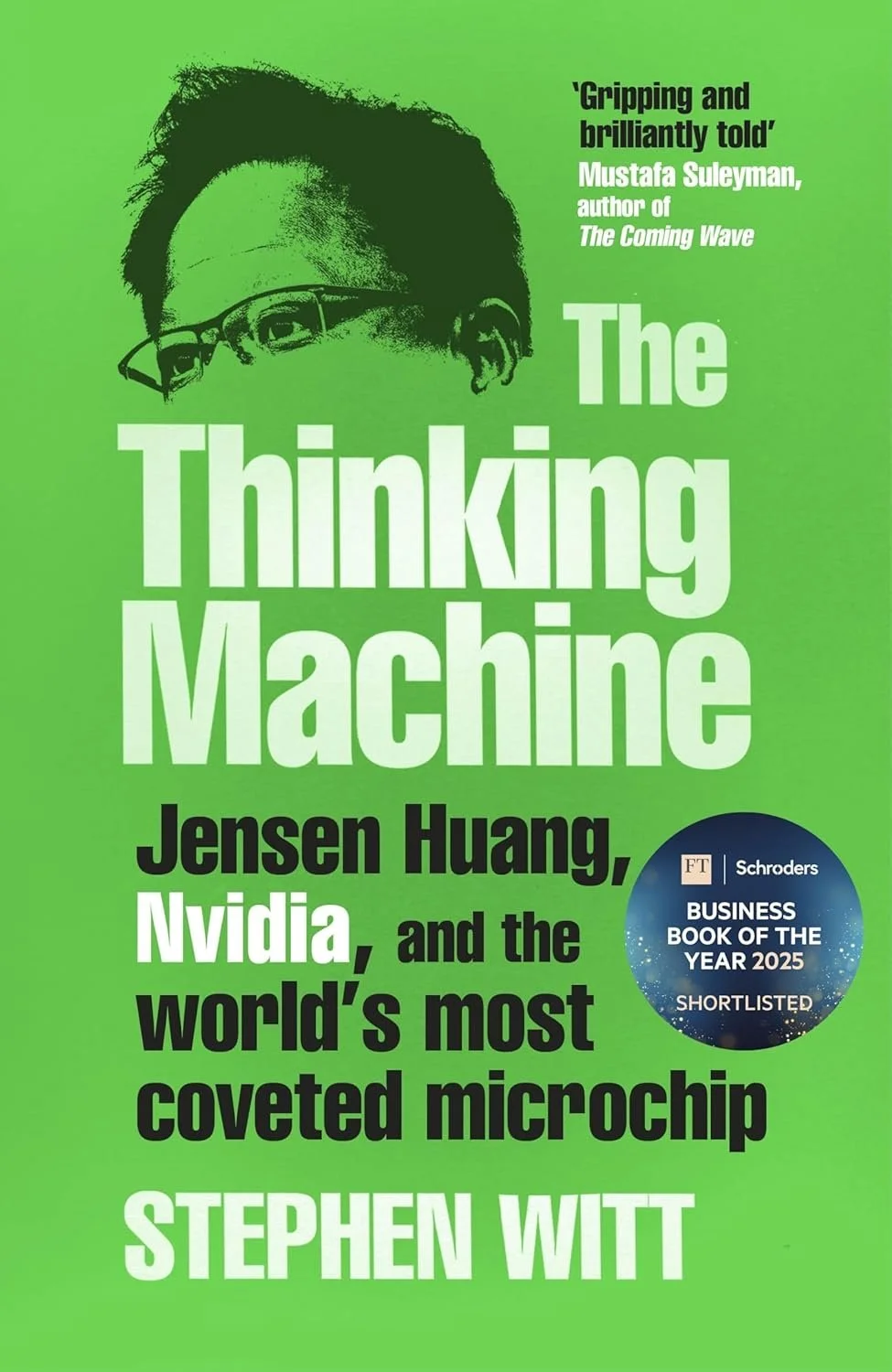
I read The Nvidia Way last year and for a while now, The Thinking Machine by Stephen Witt has been sitting in my Audible recommendations. After a couple of recent below par book selections, I decided to give this one a go. It worked out as being more of a refresher than providing any new insights which is not necessarily a criticism but more an observation you probably don’t need to read both. One will do the job.
Focusing on The Thinking Machine for now. What it does well is cover the full breadth of the Nvidia story harking back to its early beginnings as well as all the trials and tribulations along the way. It was far from a given that Nvidia would find its way to becoming the world’s most valuable company. In fact there were periods where it was questionable whether it would survive as a business at all. Reading the book you’re able to go back to the companies routes from a risky bet on computer graphics for gaming to leading at the forefront of the AI boom.
I often hear commentary in financial media questioning whether Nvidia’s dominance can or will be displaced by competitors. What I’m often left wondering if how much the commentators understand about the actions and history that have lead up to it developing and sustaining the moat it has. Peel back the layers and what may seem like a boom of the last few years is actually years of preparation, risk taking, and strategic positioning that put the company in such a unique position when AI accelerated. For anyone unfamiliar with the backstory, this book makes it much harder to dismiss Nvidia’s rise as luck or timing alone.
You also come away with a clearer picture of Huang himself. Relentless in work ethic, famously demanding, and unafraid of public critique within the organisation. His leadership style is not universally appealing and certainly won’t be for everyone. There are stories of intense internal reviews and tear downs, yet alongside that sits deep loyalty from many within the company and a shared sense of mission that has endured over decades.
It’s fascinating to follow the arc from an idea discussed in a Denny’s to leading the frontier of AI. There are lessons here that will inspire some and serve as a note of caution for others. Building something of this scale requires time, sacrifice, and a tolerance for pressure that many would not willingly sign up for.
Whether you leave feeling energised or slightly wary of what such success demands, it is difficult to finish this book without gaining a deeper appreciation for both the company and the individual behind it.
Who’s it for?
Anyone who enjoys business biographies will find this worthwhile. Investors, particularly those focused on technology and AI, will benefit from understanding Nvidia’s origins and evolution. If you want to properly assess a company’s moat and long term positioning, it helps to understand the culture, decisions, and leadership that shaped it.