
The Art of Winning
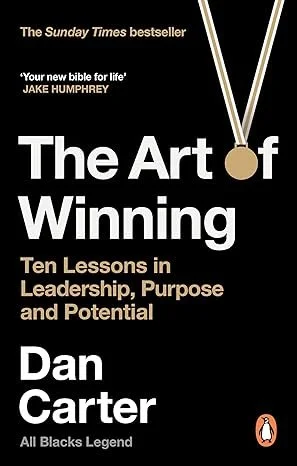
Whenever I head into town, I tend to drop into the local Waterstones and pick up a book without necessarily having one in mind. It’s a practice I’ve got into that encourages me to add new books to my library that may not necessarily be on my radar. The Art of Winning by Dan Carter was one I picked up on a such a visit and what a find it turned out to be.
I’ve read a lot of books on leadership and high performance over the years, but there’s something about this one that just works. Carter strikes a balance between elite performance and everyday applicability in a way that really resonates or at least did for me. You don’t need to be a rugby fan or even a sports fan to take a great deal from it. If you’re a high performer, or striving to be one, there’s a lot here that I suspect will resonate with you too.
As it happens, I’m not particularly into rugby and knew very little about Dan Carter going in. He writes in a grounded, relatable way that makes the lessons accessible and practical to easily incorporate into your own life and work. I could barely get through a page without highlighting several lines, and I’ve since recommended the book to my mastermind group.
The section on red and blue zones, describing different mental states I found especially useful. The distinction between operating in a red (angry, frustrated, emotionally charged) state versus a blue (calm, focused, composed) one will feel immediately familiar to anyone who’s worked under pressure. The emphasis on clarity of communication also stood out to me, not just as a sporting principle, but as something that translates directly into business and leadership environments.
Carter writes in the context of moving on from his professional rugby career and repurposing himself for the next phase of life. At 39 years old myself, I can relate with a lot of the thoughts around potential re-purposing, the continued evolution and looking towards the next phase of professional life even if I’m not coming out of a professional sports background.
I honestly can’t recommend this highly enough and suspect it will find its way onto the gifting list for several friends and colleagues over the coming years.
Who’s it for?
If you’re striving for high performance or already operating at a high level, this book is absolutely for you. It offers practical tools alongside lived experience, which although they come from an elite sportsman may help you in feeling less alone in the challenges that come with pressure, expectation, and growth. It’s also an excellent read for anyone in a period of transition, personally or professionally, offering a positive and grounded way to frame what comes next.