
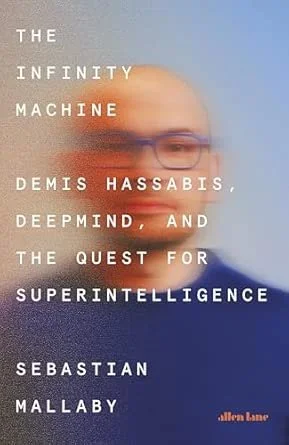
I was already familiar with Demis Hassabis prior to reading The Infinity Machine, largely through documentaries and podcast appearances. It’s clear from any interview with him that he operates at an incredibly high level of intelligence so I was interested to learn more.
With that in mind, I really wanted to like this book, however I was left with more of a lukewarm feeling about it by the end.
It’s not that the book fails to tell the story of Hassabis and DeepMind, because it does. It’s just that it tries to cover too many other elements of the AI story at the same time.
Anyone familiar with AI developments over the past decade will be aware of how intertwined the fortunes of the key plays such as OpenAI, Google and Anthropic are. That’s a story in itself. At the same time, Hassabis’ upbringing, the founding of DeepMind and its relationship with Google is also sufficient as its own story.
For me personally, trying to combine all of these threads into a single book felt like it diluted the overall enjoyability. The first half was enjoyable and held my attention but it just felt like the second half of the book became a bit of a struggle to stay engaged with. At times it recaptured my interest, only to lose it again as it shifted between too many parallel storylines.
That said, reviews are always subjective. If you’re newer to the story of AI’s rapid development over the past decade, the broader scope may actually make the book feel more complete and engaging.
There’s still clear value in the book, particularly in its coverage of Hassabis’ early life, the founding of DeepMind and the breakthroughs the company has achieved. Those elements alone are compelling and worth understanding. The fact that in my opinion it’s packed with too much information is likely a draw to other people.
In fairness, my assessment likely says as much about what I was hoping to get from the book as it does about the book itself. For some readers, the wider, more holistic approach, including the parallel developments across the AI space, may make for a richer and more educational experience.
Who’s It For?
Given that, I’d say this is best suited to readers who are less familiar with Hassabis or the detailed history of AI companies over the past decade, or those looking to fill in gaps in their understanding.
If you’re already well versed in the space, you may find certain sections more engaging than others.