
Embracing Hope
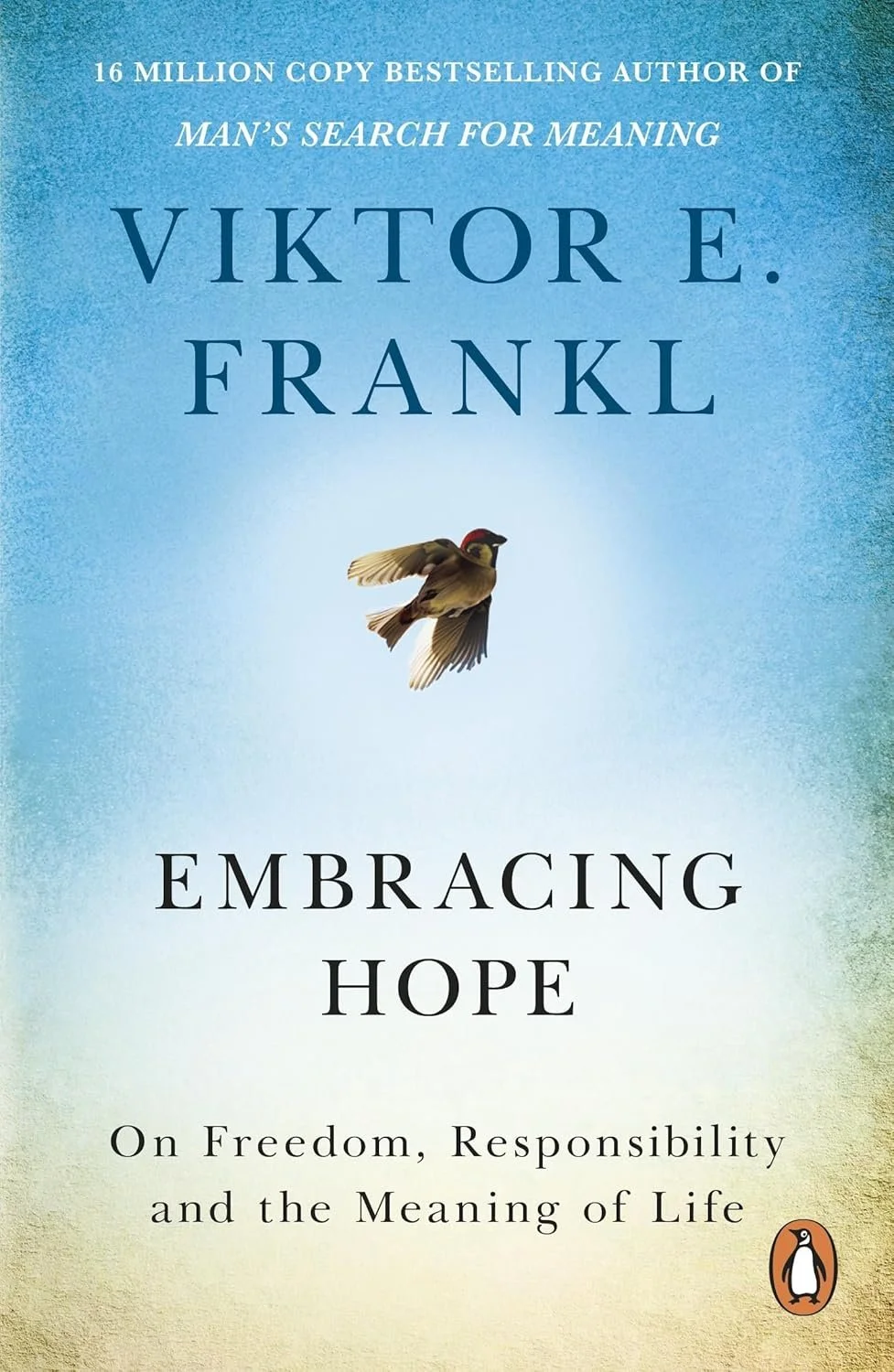
Periodically I re read Man’s Search for Meaning by Viktor Frankl, yet until recently I’d never ventured into any of his other books. I’m not entirely sure why, given the value I seem to take from Man’s Search every time I revisit it. Regardless, I’m glad I broke the pattern when I picked up Embracing Hope during a recent visit to the local bookstore.
One of the first things the book brought to my attention was something I hadn’t previously realised about Man’s Search. The thesis behind the book had largely been developed before Frankl’s time in the concentration camps. His experiences there, horrific as they were, served more as a proving ground for those ideas in perhaps the harshest environment imaginable.
Embracing Hope offers similar philosophical guidance around finding meaning and purpose, though it approaches these ideas in a different way to the stark and deeply confronting narrative of Man’s Search.
The book itself is composed of four sections drawn from separate writings. Some take the form of lectures or interviews, with the book presenting them as transcriptions. Across these pieces Frankl explores themes outlined in the subtitle, weaving in both personal experiences and stories from patients to illustrate his ideas.
At under 150 pages it’s not a long book, but it’s one that lingers with you after finishing it. The central thread running throughout is the reminder that whilst hardship and suffering are not prerequisites for meaning, meaning can still be discovered even in the harshest circumstances.
Frankl is careful to distinguish between suffering as a condition and suffering as a requirement. Meaning doesn’t require extreme hardship, nor the suffering described in some of the examples throughout the book. Rather, his message is that even when life appears bleak or overwhelming, the possibility of meaning remains.
It’s an important distinction, particularly in a modern world where some voices almost advocate the deliberate pursuit of hardship as a path to meaning whereas Frankl’s perspective is more nuanced. Difficulty may reveal meaning, but it isn’t something that needs to be manufactured in order for life to have purpose.
A thread he pursues is that whilst work itself may not always be the source of meaning, having a task to direct your efforts towards, or a loved one to devote your energy and attention to, can provide the foundation from which meaning grows. Without that orientation, life can easily become busy yet hollow. With it, even a relatively simple life can feel deeply purposeful.
Ultimately this is a book that invites pause and reflection. It encourages the reader to consider the ideas it presents rather than rushing through them. In a world increasingly marked by division, uncertainty and a growing sense among many people that life lacks meaning, Frankl’s message about hope, freedom and purpose feels as relevant now as ever.
Who’s It For?
I’d say this is a book for almost anyone.
For readers who wanted to share Man’s Search with others but felt the experiences described there might be too heavy, Embracing Hope may offer a more accessible introduction to Frankl’s ideas. Whilst it still touches on difficult themes through references to Frankl’s patients, it may feel easier to approach than Man’s Search itself.