
Risk & Reward
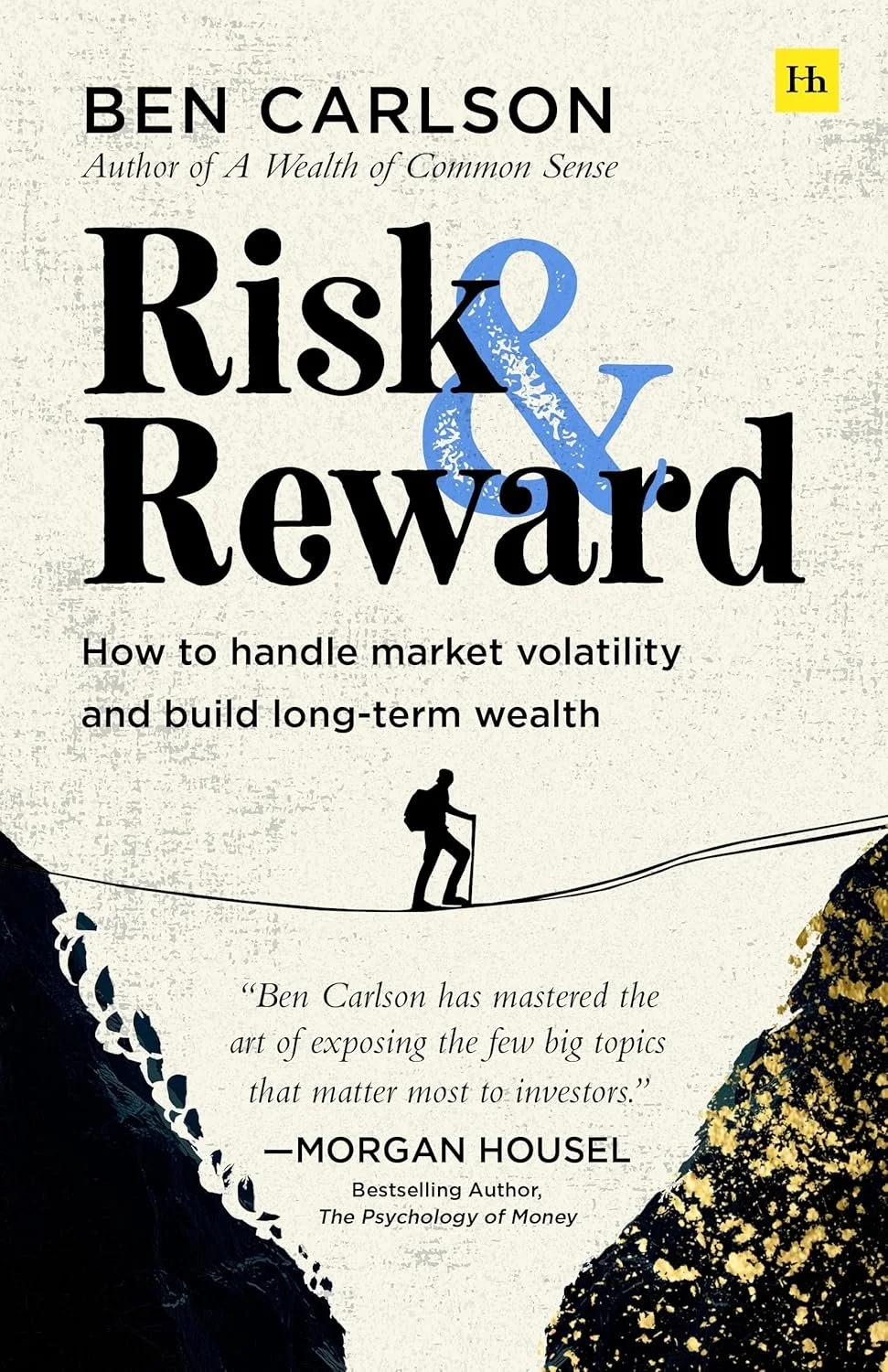
I listen regularly to Ben Carlson on the Animal Spirits podcast, and he’s also been making the rounds on several other investing shows recently following the release of his new book.
When it comes to podcast hosts whose work I follow consistently, I almost feel an obligation to check out any books they release and support them. Having listened to several interviews in the lead up to publication, I was already relatively aware of what to expect, but it still proved to be a worthwhile listen. Given the book’s heavy use of data and charts, I’ve also purchased a physical copy for future reference.
Whilst Risk & Reward hasn’t fundamentally changed my thinking on long term investing, it’s exactly the type of book I wish I’d discovered in my early twenties.
Regardless of when you begin investing, Carlson provides an excellent deep dive in to many of the core principles involved in balancing risk and reward over the long term. Supported by extensive data, he takes the reader through financial market history, focusing primarily on the US whilst also drawing comparisons with other markets, particularly when contrasting different investment outcomes and experiences.
Many people are attracted to the idea of trading their way to wealth or finding the fastest route to life changing returns. The reality, however, is that successful investing is often a much slower process. It requires patience, discipline and, perhaps most importantly, the restraint to avoid unnecessary risks or excessive trading activity that can undermine long term returns.
A lot of what Carlson covers could perhaps be described as common sense, without trying to downplay the quality of the book. The principles themselves aren't especially complicated, but they often run counter to our natural instincts. One of the key takeaways is the investing game can be difficult enough at times without making it unnecessarily harder. Too often we feel compelled to increase risk in pursuit of quicker rewards rather than finding a balance that allows compounding to work over time.
By the end of the book, you should have a much clearer understanding of how to think about risk, manage it appropriately, and position yourself to benefit from the substantial rewards that patient investing can ultimately produce.
Who's It For?
As mentioned above, this is an excellent book for anyone early in their investing journey, regardless of age. If you're fortunate enough to discover it in your twenties and begin applying some of its lessons early, you'll be laying strong foundations for the future.
That said, more experienced investors shouldn't dismiss it. Even if the principles themselves are familiar, the depth of research and supporting data make it an enjoyable and worthwhile read.