
Inside The Box
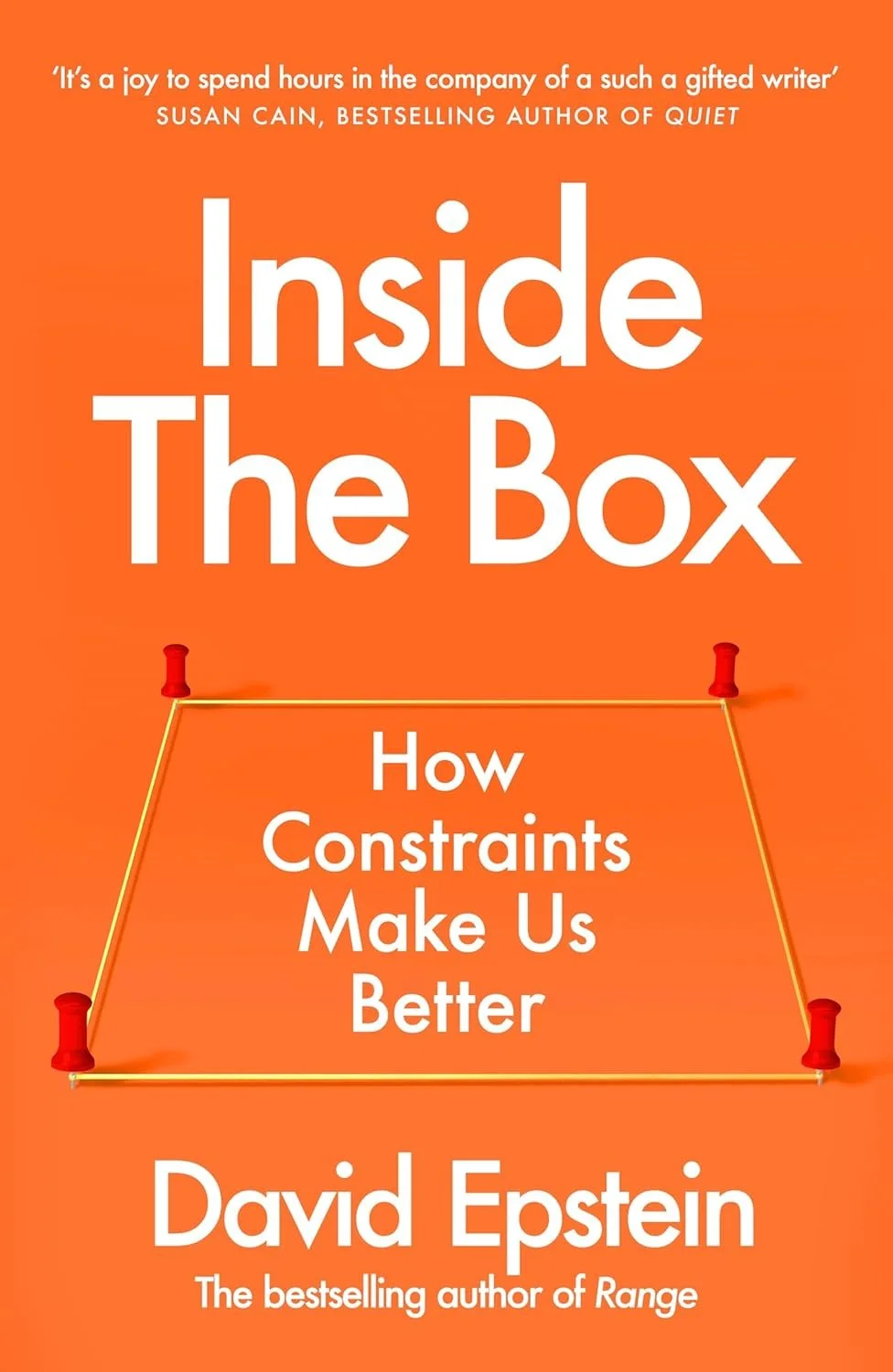
Inside the Box appeared on my radar recently as David Epstein has been making the rounds on the podcast circuit to coincide with the release. Having read and enjoyed a couple of his previous books, I thought I'd give this one a go too.
The central premise of the book, that constraints can drive creativity, innovation and problem solving, isn't necessarily a new idea. It is, however, an idea that we all need a reminder of, particularly in a world where we're often overwhelmed by the sheer number of options available to us.
Only recently I was discussing this very topic with a friend who is considering changing jobs but struggling to determine which direction to take. The challenge isn’t necessarily the lack of opportunities but the opposite. Faced with too many possibilities, choosing one to progress with is the challenge. Often the path forward isn't found by expanding the search further but by deliberately narrowing it.
I think most of us intuitively understand the value of constraints. We know they can help reduce analysis paralysis and simplify decision making. As is often the case though, understanding a principle and consistently applying it are two very different things.
Epstein blends research, history and storytelling to bring the concept to life through a range of examples where limitations and constraints ultimately led to breakthroughs that may never have occurred otherwise. The result is a book that should leave readers reflecting on where the idea might apply in their own lives.
The books release serves as a timely reminder that’s more relevant now than ever. Technology has given us unprecedented access to information, resources and opportunities, yet that abundance can sometimes become a burden. Choosing a holiday can quickly spiral from selecting a destination to comparing dozens of locations, hundreds of hotels and thousands of reviews. Career decisions can become equally exhausting when faced with an almost limitless set of possibilities.
One of the book's strengths is reminding us that constraints aren't always obstacles to overcome. In many situations they can be deliberately created and used as tools to improve decision making, focus attention and encourage more creative thinking.
Hopefully the key takeaway is that whilst constraints are often imposed upon us, we can also choose to impose them ourselves. Done thoughtfully, they can lead to better outcomes, reduced stress, increased productivity and perhaps even greater satisfaction with the decisions we ultimately make.
Who's It For?
Are you currently facing a decision in your life or work where the number of available options is preventing you from moving forward?
If so, this book will likely resonate.
More broadly though, I'd say this is a book for almost anyone. Very few of us are immune to the constant stream of choices and information that modern life presents. As a result, most of us could probably benefit from an occasional reminder that sometimes less really is more.