
Simple But Not Easy
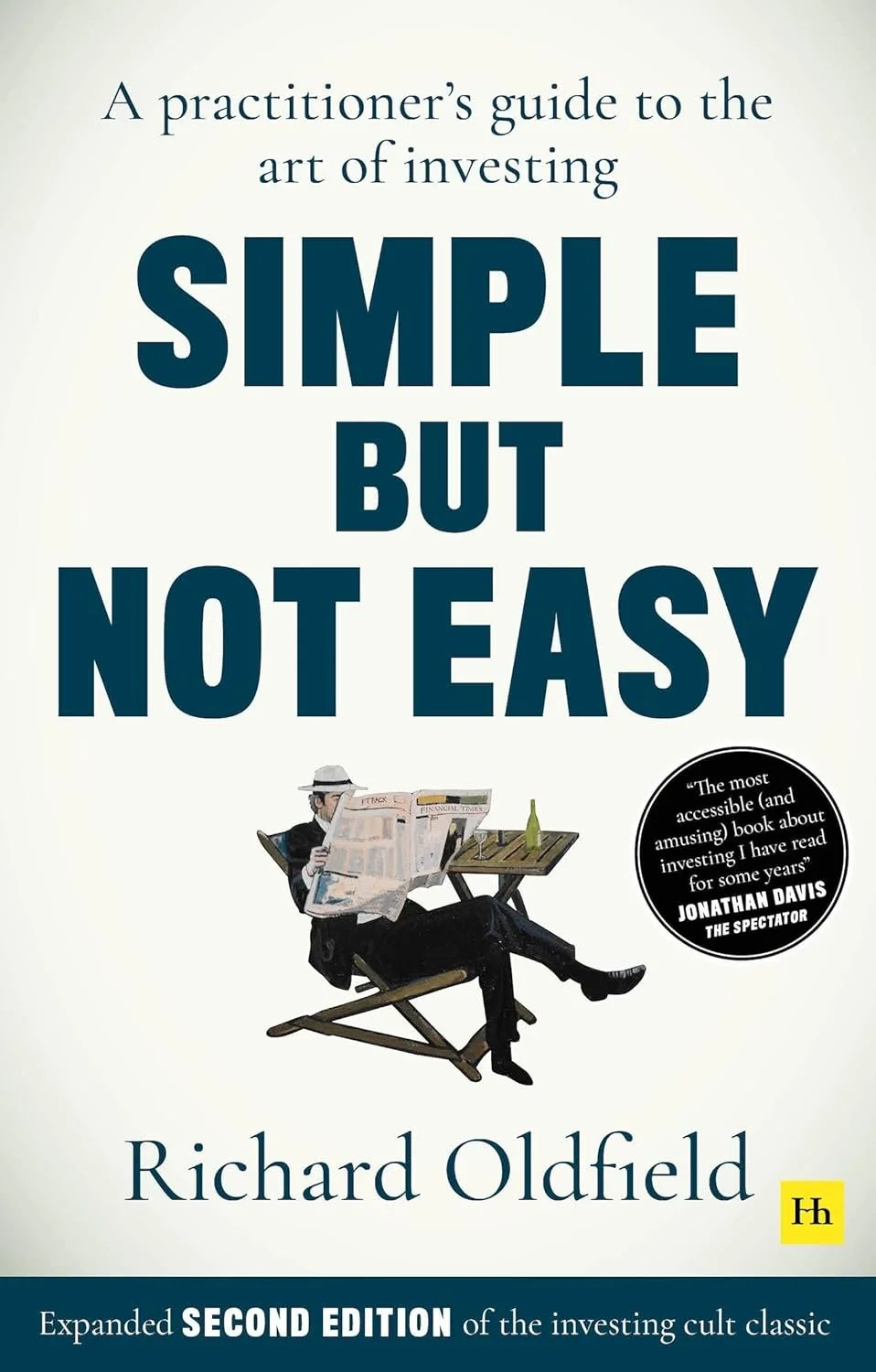
On a recent episode of Talking Billions, Bogumil interviewed Richard Oldfield, who referenced his book Simple But Not Easy a couple of times during the conversation. I enjoyed the episode and, by association, tend to hold Bogumil’s guests in reasonably high regard, so when I saw the audiobook version was available, I was happy to give it a listen.
I wasn’t entirely sure what to expect from the subtitle A Practitioner’s Guide to the Art of Investing. I never really tire of investment books, even when they cover familiar ground, as there are usually one or two ideas you can incorporate into your own investing practice. That said, I did suspect I might be wandering into another “back to basics” investing manual.
Thankfully I can report it was anything but.
From the outset, Oldfield makes clear he isn’t starting with explanations of the fundamentals. If you’re looking for an introduction to valuation methods or basic terminology, you’ll need to look elsewhere. First box checked.
Instead, he takes the reader through a wide range of insights drawn from lived experience, often supported by anecdotes, some delivered with light humour. One story in particular stood out, where a money manager cautioned against making assumptions because, as the saying goes, it makes an ass out of you and me. Simple advice but telling in an industry where overconfidence is rarely in short supply.
What you gain from this book isn’t a set of trading instructions or a formulaic blueprint for beating the market. Rather, you’re exposed to principles and mental frameworks, not only for managing your own capital but also for assessing investment managers. Oldfield does a strong job of highlighting the gap between what investors think they’re getting and what they’re actually getting, particularly when it comes to performance and incentives.
I listened to the revised edition, which includes updates covering some of the more exotic investment vehicles that have emerged since the original publication.
Overall, I came away having learned more than I expected. To be fair, I rarely conduct deep due diligence on books before buying them, with usually just a glance at the synopsis and a few reviews but still, this exceeded expectations.
You won’t find step by step trading strategies here, nor detailed valuation models. What you will find are additional principles, practices and watch outs to fold into your long term investing discipline.
Who’s It For?
I’d place this firmly in the category of books written for investors. You’ll need a working understanding of basic valuation concepts and investing terminology, though you don’t need to be an expert.
It’s a solid read for both experienced and relatively junior investors. And for anything unfamiliar, you can always pause and look it up along the way.