
The Book of Elon
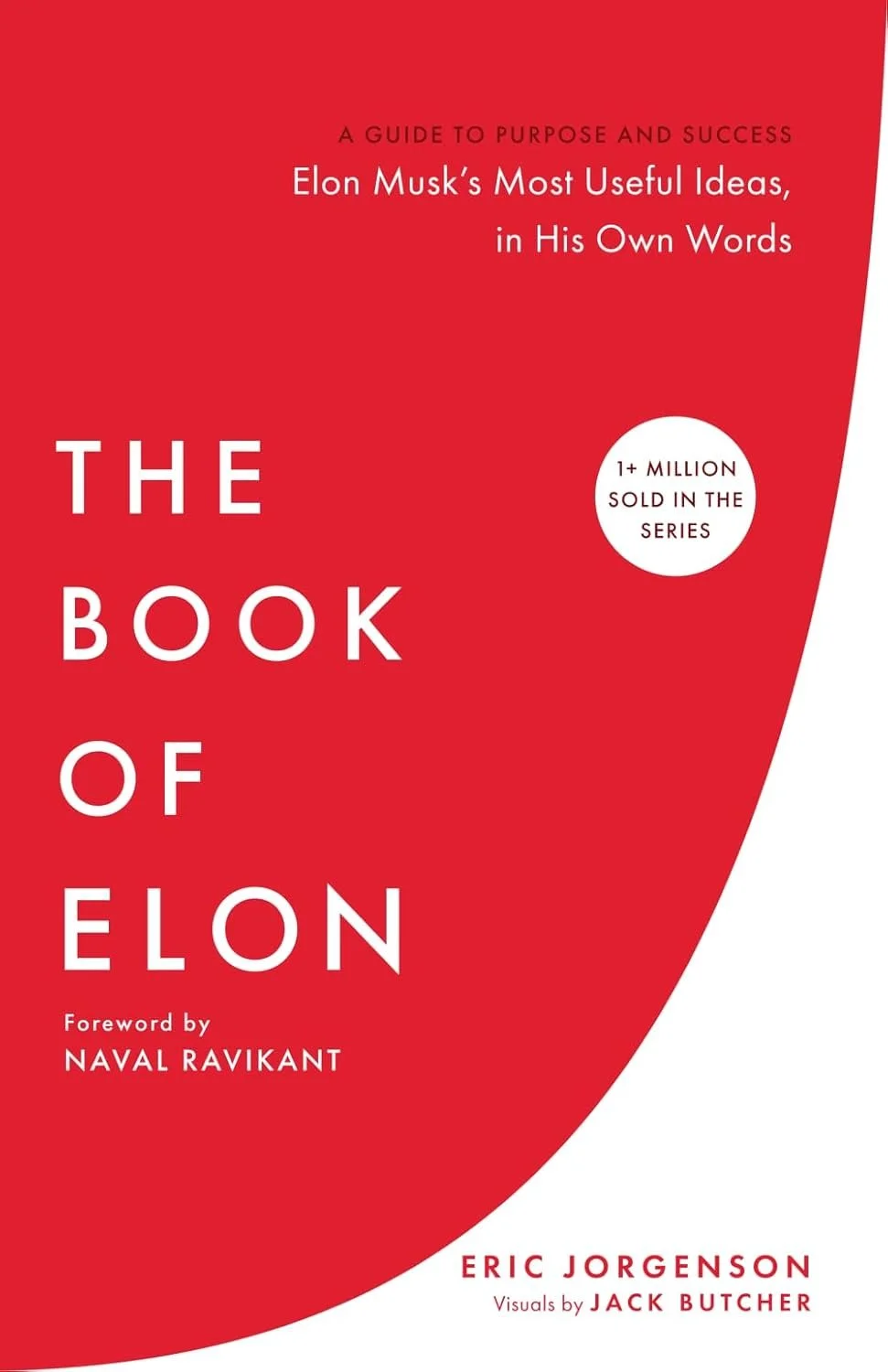
I came across The Book of Elon when it was covered on a recent episode of Founders and then again on The Acquirers Podcast where Eric Jorgenson was interviewed. It was the latter of the two that persuaded me to give it a go. Founders style book dissection is useful but you always get a better feel for a book listening to an author interview.
The interview also reminded me why I was already familiar with Jorgenson. I’d previously enjoyed his book on Naval Ravikant as well as his Smart Friends podcast, so I had a sense of what to expect going in.
I wasn’t entirely sure how much new information I’d get, having already listened to Elon Musk’s biography and consumed a fair amount of content on him over the years. That said, I’m glad I gave it a listen and have since ordered a physical copy for reference.
If I had to sum it up, it’s essentially a well curated collection of Elon’s key ideas and insights gathered from interviews, talks and other sources. Much of it may feel familiar if you’ve followed him closely, but the value lies in the way Jorgenson has consolidated everything into a single, accessible format.
As I mentioned in my review of Elon’s biography, I’d hope readers don’t let their personal views on him get in the way of engaging with the substance of his thinking. Whether you agree with him or not, there’s a lot to learn from how he approaches business, engineering and problem solving. Ignoring that entirely feels like a missed opportunity.
The book itself is made up of curated interviews and excerpts, largely from Elon directly, covering the companies he’s built, the products he’s worked on and the philosophy that underpins his approach to work and purpose.
If you’re looking for a deep dive into Elon as a person, this isn’t quite that. For a more complete picture of his life and character, I’d still point towards Elon Musk by Walter Isaacson.
What this book does offer is a concentrated set of principles and mental models. It highlights the importance of choosing work with meaning, committing to it fully, and understanding the level of risk and sacrifice required if you’re aiming to build or scale organisations at the level of Tesla or SpaceX.
It’s also structured in a way that makes it easy to dip in and out of, rather than reading cover to cover. The physical format lends itself well to highlighting and annotating, which is how I expect I’ll use it going forward.
Who’s It For?
If you’ve already spent a lot of time listening to Elon interviews or podcasts, don’t expect a huge amount of new information beyond the benefit of having it all brought together in one place.
If you’re less familiar with his thinking though, this serves as a very accessible introduction and you’ll likely come away with a number of useful ideas and a fresh dose of motivation.