
The Unspeakable Level
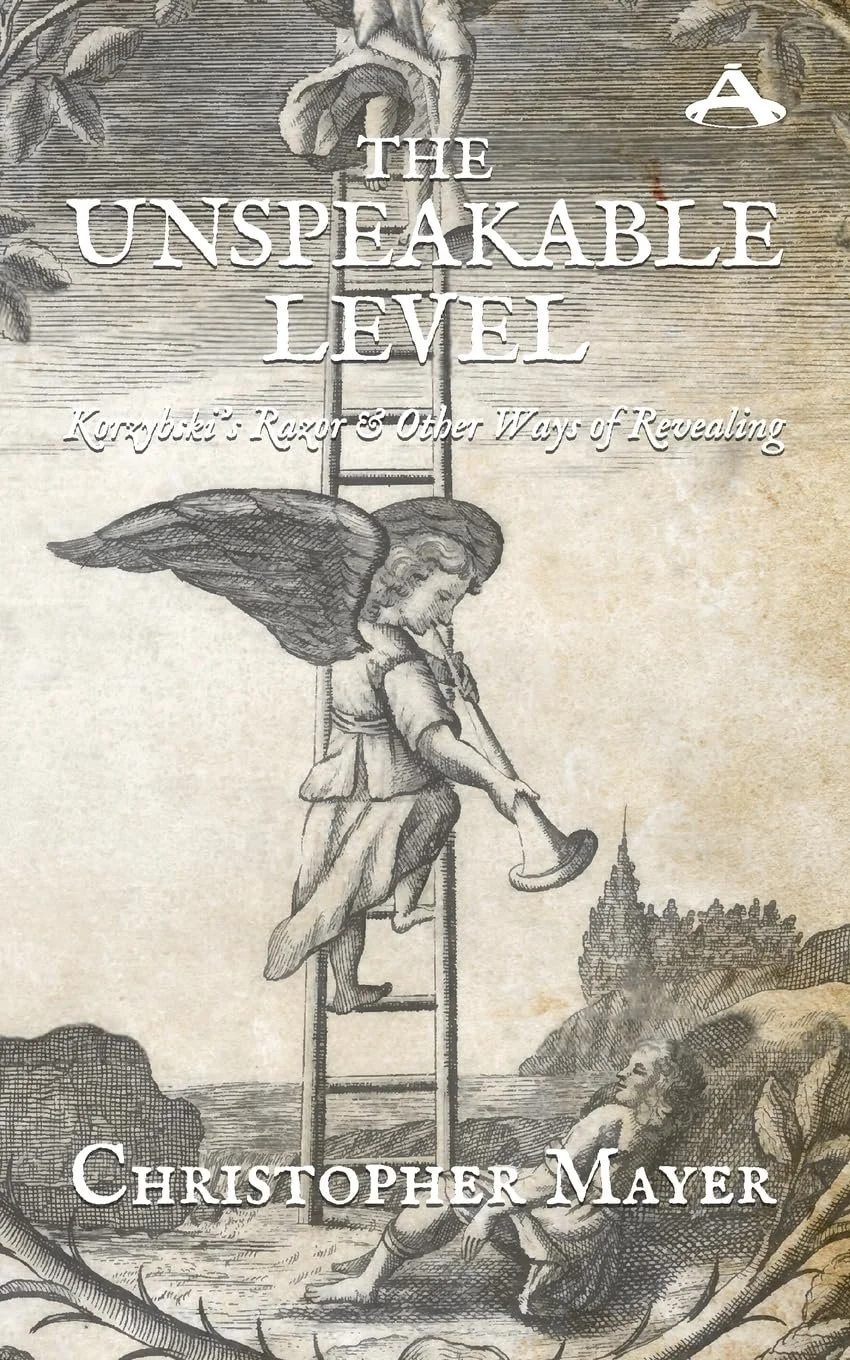
The Unspeakable Level by Christopher Mayer was a rather unexpected find.
My previous experience of Mayer came through his book 100 Baggers, and based on that I had, incorrectly as it turns out, placed him firmly in the world of general or value investing. It wasn’t until the recent launch of The 100 Year Thinkers that I was exposed to a different side of his thinking. During one of the episodes, this book came up, discussing its focus on language and semantics.
Given my existing interest in the areas of philosophy and language, as well as a general tendency to follow anything that sparks curiosity regardless of the author’s background, I ordered a copy.
At the centre of the book is Alfred Korzybski’s idea of “the unspeakable level,” which refers to direct experience, the actual events and processes of the world. As the foreword puts it, this is the territory that our language attempts to map.
Most of us intuitively understand that words are approximations. They’re labels and interpretations we use to describe reality, never the thing itself. Even those shared meanings though shift over time depending on context, culture and era. The book takes this idea and expands it into a broader thought exercise, encouraging the reader to separate the words we use from the reality they attempt to describe.
For some, that concept will immediately resonate. For others, it may sound like abstract wordplay. Where you land on that spectrum will likely determine quite quickly whether this book is for you.
I’ve often found myself returning to the idea that “the map is not the territory” when explaining the gap between representation and reality, whether in language or in my professional capacity focusing on project management, specifically plans vs execution. We create models, descriptions and frameworks, but they’re never the thing itself. I tend to enjoy exploring that distinction and scrutinising words to get to the true core of what people are trying to say or describe, so naturally I found this both engaging and thought provoking. Coincidentally, I wasn’t aware when I ordered the book that Korzybski himself coined the phrase “the map is not the territory”.
Interwoven throughout the book is a more imaginative thread, where Mayer introduces a dreamlike journey involving an old wizard. For some, this may provide a useful break from the more conceptual sections, whilst for others it may feel like an unnecessary detour. I think the passages help enrich the focus of the book though.
The book also explores the idea of opposites and how they coexist. Concepts such as good and bad, light and dark, are presented not as isolated states but as part of a larger whole, where one cannot exist without the other. Mayer connects these ideas to both well-known and lesser known philosophers where their approaches align with Korzybski’s thinking.
Overall, I found it an enjoyable dive into questioning the language and assumptions we often rely on without much thought. It encourages you to pause and consider how much of what we believe to be “real” is actually filtered through interpretation.
Who’s It For?
This is likely to resonate most with readers who already have a strong interest in philosophy, language or semantics.
Without that interest, it may feel overly abstract or like an exercise in semantics for its own sake. For those who do enjoy exploring how we think, speak and interpret the world though, it should prove to be an enriching read.