
The Beauty of Silence in an Age of Noise
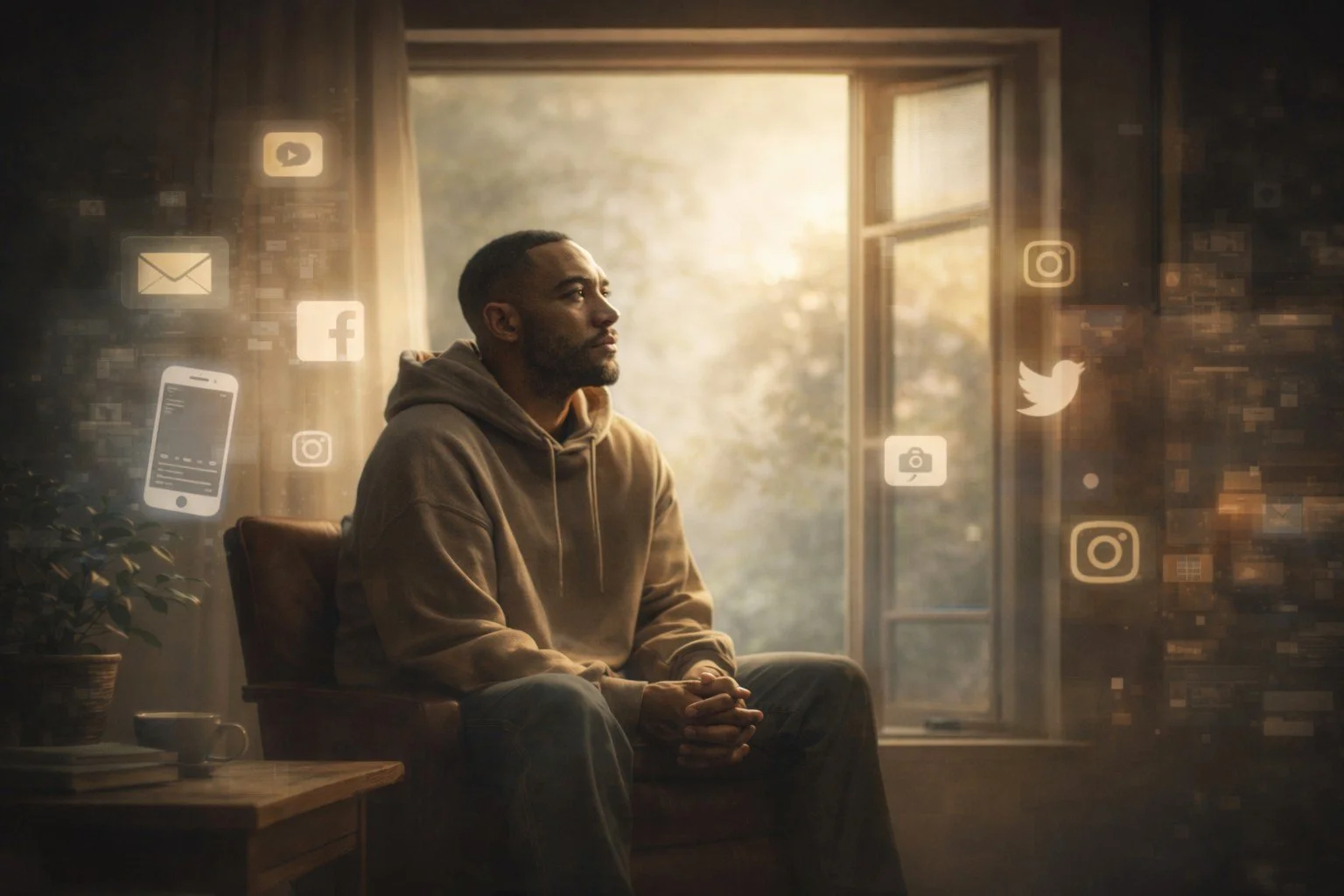
In today’s world, noise and distraction have become the norm, silence the novelty.
You’re reading this on a phone or computer screen right now, but looking around you, how many other things are vying for your attention at this very second? Email notifications, WhatsApp pings, collaboration tool pop ups, multiple browser tabs. These are just the visible cues but part of your mind may also be preparing for its next incoming distraction, wondering what’s new on TikTok, Instagram or Snapchat. Submit to the pull and you’ll likely find yourself in a daze of scrolling, tapping like, refreshing, and absorbing fresh algorithmic distractions for the next half hour.
It’s easy to conclude this is a uniquely modern affliction and that distraction is the defining weakness of our era. Yet as far back as the 17th century, Blaise Pascal famously stated:
“all of humanity’s problems stem from man’s inability to sit quietly in a room alone.”
Whilst the tools at our fingertips are vastly more advanced than in Pascal’s time, human nature, it seems, remains largely the same.
Smartphones, social media, streaming platforms and endless digital feeds have intensified the competition for our attention. What if however, the source of our struggle isn’t the devices, but instead our unease with stillness and sitting with our own thoughts?
We cast judgement on younger generations for getting lost in the deluge of technologically fuelled distractions. Yet it would be naïve, and perhaps hypocritical, to treat mass distraction as a Gen X or Gen Z problem. As a millennial, I see it in myself and in friends and family alike. Discipline is required daily if you’re going to maintain focus.
I’ve recently been reading Brad Stulberg’s The Way of Excellence, where he refers to the onslaught of attention-seeking tools as “algorithmic mass distraction” and how companies compete relentlessly for slices of our attention to improve their bottom line. Distraction and addiction aren’t accidental, they’re engineered.
At the same time, we live in an era of abundance unprecedented in human history. For most of our existence, humanity struggled through hardship and scarcity. Abundance feels permanent to us now, but on the scale of our existence it’s still a recent phenomenon. We aren’t wired for constant novelty and infinite stimulation, yet our access to both continues to grow exponentially.
This all leaves us fighting on multiple fronts, wrestling with our own discomfort while immersed in structures designed to amplify it.
The consequences of constant stimulation compound quietly. A shortening attention span, a creeping restlessness and the inability to sit for more than a few minutes without reaching for your phone or some other device. Anything to avoid stillness. Anything to avoid silence.
The Cost of Distraction
When the mind is continually interrupted, we never give it time to settle. Rather than finding space for reflection, our thoughts remain in reactive mode, constantly responding to external stimuli. Instead of consuming new ideas and sitting with them, we skim, always searching for the next thing. We move from input to input without allowing anything to properly land.
When every spare moment is filled, there’s no room for original thought to emerge and no time for ideas to connect beneath the surface. You can find countless stories of people whose best ideas come on a walk or after disconnecting, allowing their mind to connect threads and cultivate something new.
Stillness and silence are no longer passive states we stumble into. They require an active decision to create the right environment for them.
To turn off notifications.
To close unnecessary tabs.
To leave the phone in another room.
To sit with a problem without immediately searching for distraction.
If it’s been a while since you disconnected from technological and social media noise, it will probably feel unnatural, even uncomfortable. Move beyond that initial friction though and something valuable waits on the other side.
Clarity. Focus. Calm.
You don’t need more input to find them, just fewer distractions pulling your attention elsewhere. Time with your own thoughts and the discipline to leave the phone alone long enough for your mind to settle.
Noise might be norm in our modern world, but it doesn’t have to be the norm for you.