
Recovery at the Margins: The Benefits Of Red Light Therapy
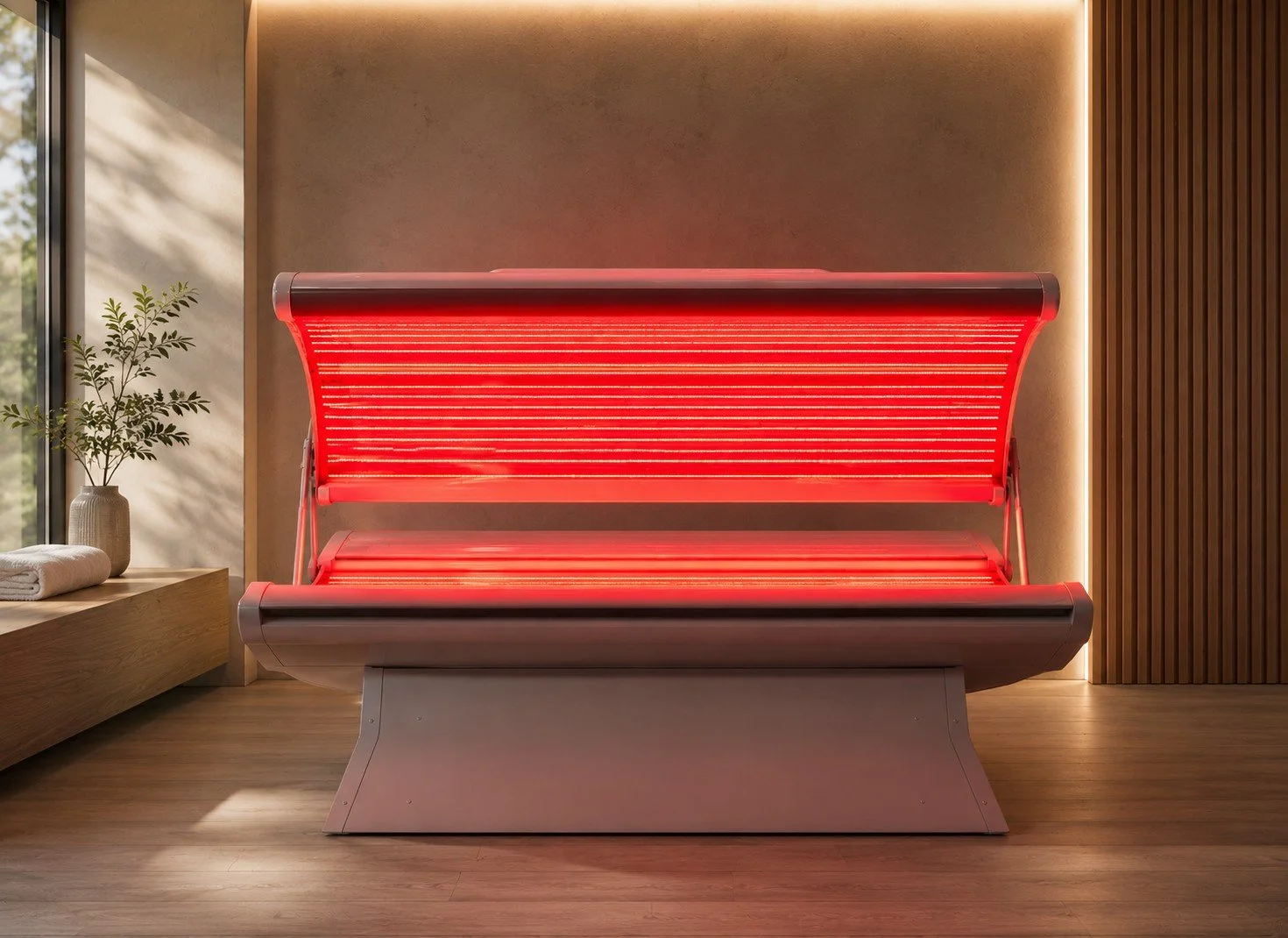
Since discovering Cryotherapy and Hyperbaric Oxygen Therapy nearly a year ago now, they’ve become a firm staple of my recovery routine. Whilst I’d tried Red Light Therapy a couple of times before, I hadn’t prioritised making it a regular commitment.
Recently though, I decided that rather than having RLT down the list as a ‘nice to have’, I wanted to start treating it with the same consistency as my other recovery practices.
After now incorporating it into my routine for the last couple of months, I've started to form a better view not only of the potential benefits discussed within the research, but also of the impact it may be having on my own recovery, energy levels and overall wellbeing.
Whilst there are no end of articles on what Red Light Therapy is available, a quick overview is probably useful before getting into my own experience.
What Is Red Light Therapy?
Red Light Therapy has attracted increasing attention over recent years, both within performance circles and the wider wellness industry. The treatment involves exposure to specific wavelengths of red and near infrared light which research suggests may interact with cells, particularly mitochondria, responsible for producing energy within the body.
It's this interaction that sits behind many of the potential benefits associated with Red Light Therapy and the reason it continues to attract growing interest from both researchers and practitioners.
Some of the benefits currently associated with Red Light Therapy include:
• Supporting recovery and muscle repair following exercise
• Reducing inflammation and oxidative stress
• Supporting skin health and collagen production
• Potential improvements in energy production at a cellular level
• Positive effects on mood and overall wellbeing
• Supporting circulation and blood flow
Given the volume of running and training I undertake each week, adding this to my recovery routine made perfect sense.
My Experience So Far
Although it’s only been a couple of months since I’ve integrated RLT into my routine, I’m already noticing a number of positives.
Similar to Cryo and HBOT I tend to feel improvements in mood and energy for the rest of the day and the following day after the session. I think partly the ability to just switch off for 20 minutes helps with a midday reset as I typically try to go during lunch.
I’ve also noticed that my focus levels remain consistently high, especially when I consider the training volume and work schedule I'm currently maintaining.
As it stands, I tend to stagger my treatments so I’m having one of either Cryo, HBOT or RLT every 3-4 days. I've considered experimenting with combining Cryo and RLT back-to-back, something I know many people do, to see whether it changes the effects I'm experiencing. The reason for pointing this out is that it’s hard to directly attribute the overall benefits I’m seeing specifically to one of the treatments now as I think in reality, I’m gaining the most benefit from taking a holistic approach that includes all of them.
What is clear though is that since placing greater priority on recovery and investing more time and energy into it, I'm feeling as good as I can remember feeling.
Bar a couple of minor niggles here and there, I'm firing on pretty much all cylinders at work whilst still maintaining an intensive training routine of 85-90 miles a week and 6 days in the gym.
Whilst we probably all want a silver bullet to recovery and performance, the reality is that most of the benefits come from prioritisation, consistency and a balanced approach.
Investing in the Margins
Probably the biggest realisation I’ve had since putting a renewed focus on my recovery is that the difference between feeling good and feeling great, at least in terms of maintaining performance, is often found at the margins.
Professional athletes understand this well. Recovery isn't viewed as separate from performance, it’s an integral part of achieving peak performance. Their ability to recover effectively determines how hard they can train, compete and perform. For most of us though, training isn't our profession. We have careers, families, responsibilities and a seemingly endless list of competing priorities all fighting for our time and attention. As a result, recovery is often one of the first things pushed down the list rather than elevated up it.
A modest investment in recovery can have a disproportionate impact on how you feel day to day though, not just physically but mentally as well. Better energy, better focus, better mood and a greater capacity to consistently perform across multiple areas of life.
Whilst I acknowledge that there’s an ongoing cost consideration as your recovery protocol adds more treatments in, like with many things in life it's about making trade-offs.
Personally, I've found myself increasingly willing to invest in things that help me maintain both my physical and mental wellbeing. The return isn't always immediately measurable, but when you're consistently feeling good, recovering well and able to perform at a high level across different areas of life, it's hard not to see the value.
Whether Red Light Therapy is right for you is ultimately a personal decision. What I can say is that after finally making the decision to prioritise it consistently rather than occasionally, I'm glad I did.