
Reps Over Rituals
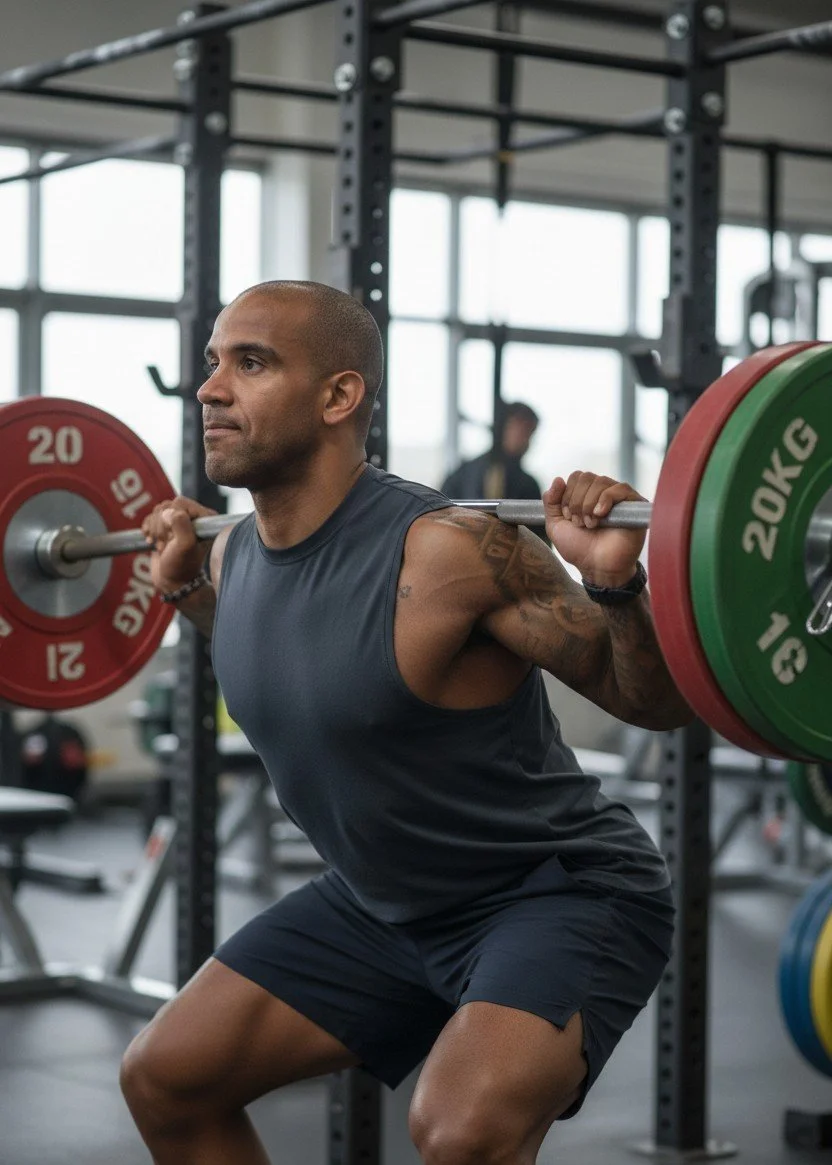
Another leg day, another personal best recorded. As I touched on in a previous post, incorporating more consistent functional training is continuing to pay dividends for my leg strength. Over the past weekend I hit 172.5kg for a one rep max on the seventh set out of my standard ten. Out of curiosity, I Googled the weight relative to my bodyweight of 79kg. The summary placed it somewhere in the advanced to elite range and highlighted that it likely represented several years of focused training.
So simple, yet so true.
I’ve written before about consistency, so I won’t revisit old ground. Instead, I want to look at it through a slightly different lens.
Back to Basics
My gym shorts are from Amazon with no obvious branding. They cost around £13 and have a light inner compression layer that holds my phone securely. My tops are Under Armour, bought on offer from the outlet village at about £20 each. My trainers are mid-range Nike’s that provide the right balance of support and durability given the mileage I run. My watch is a Garmin I bought years ago as mandatory kit for my first ultramarathon. It’s temperamental in heavy rain and occasionally flicks through settings when I least want it to, but it tells the time which is about all I need given I track distance on Strava.
I take supplements for energy and recovery, but they’re complementary to my training rather than the primary focus.
What’s the relevance of all this?
Everything around my training is purposeful and directed towards an outcome, nothing more. When I step into the gym it’s just me and my playlist. I train alone and pretty much always have. When coupled with the fact I’ve basically extricated myself from social media of the past few years, very few people even have any insight of what I do week to week. I share the occasional update with close friends, and I write here, but beyond that I fly largely under the radar.
In an age of abundant information, it’s easy to lose the forest from the trees. We’re constantly presented with new routines, new supplements, new optimisation strategies and new pressures to look the part. You can have the right gear, a detailed warm up routine, and a well-structured supplement plan, but if those supporting elements begin to outweigh the actual work, the return becomes marginal at best.
The trap to avoid is letting preparation feel like it’s sufficient progress in and of itself.
At some point the bar has to be lifted. The hard miles have to be run. If all the effort goes into preparation but not enough into pushing the body under meaningful load, there will be no development. No growth.
This isn’t an argument against supplementing for recovery, choosing kit you feel comfortable in, or tracking your metrics. It’s simply a reminder not to let the scales tip too far towards the supporting elements and away from the actual work.
I often say to friends running is just one foot in front of the other and lifting is just pushing or pulling weights. Training, at its core, is simple but it isn’t easy. You apply stress to the body, you recover, and you repeat. Over time, if the stress is sufficient and the repetition consistent, adaptation follows. Of course you refine your technique, build skill and gain confidence in the movements, but the main focus is weight and work.
The hardest workouts and the most valuable reps rarely make for the most aesthetically pleasing videos to post, but they’re the ones that matter most.
Ultimately the bar doesn’t care about your branding. It’s an inanimate object, simply a tool for you to exert force on, stressing your muscles in return for the gift of growth and strength.
Strip away the noise and all that’s left is the work.