
Masters of Uncertainty
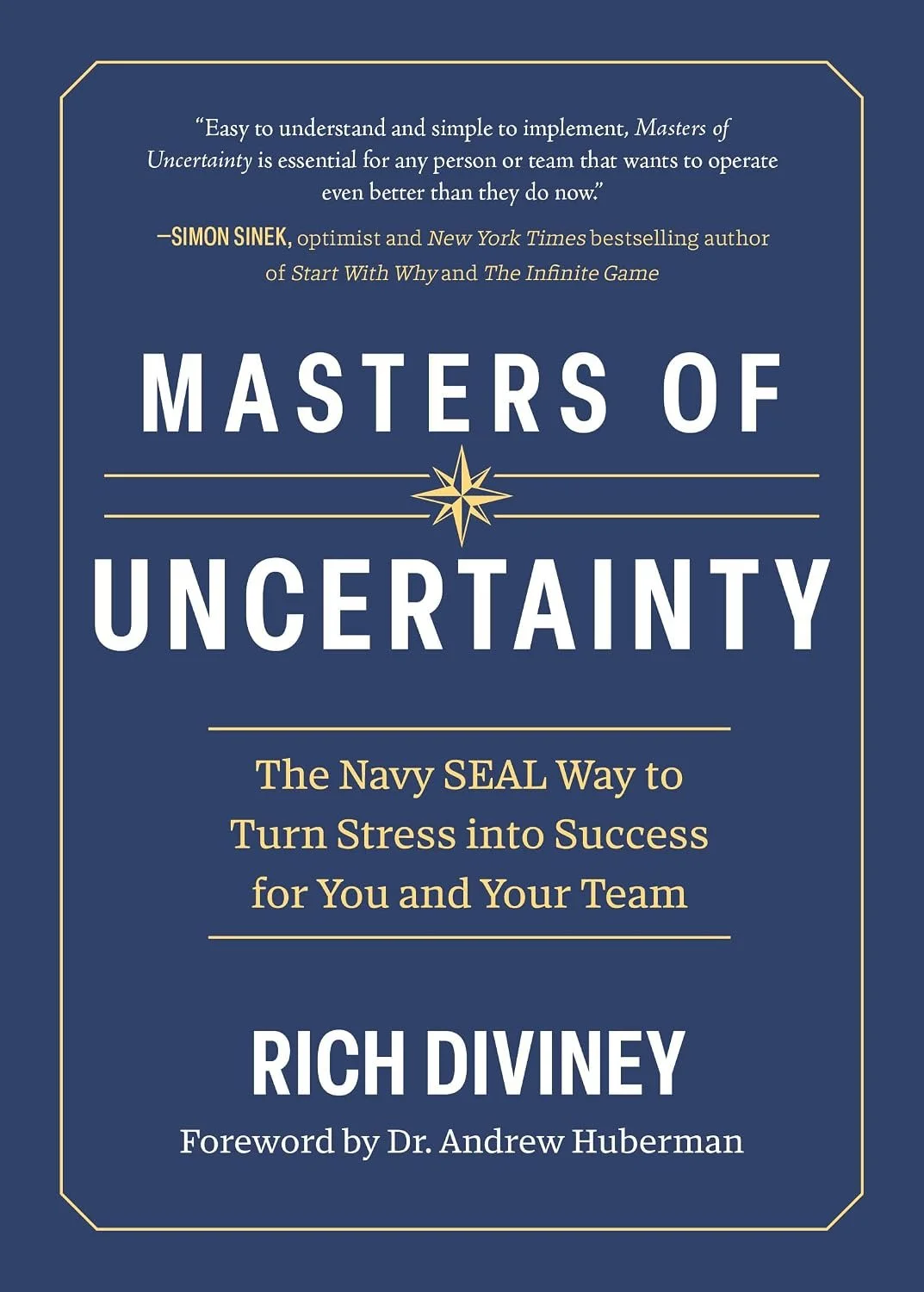
I found myself a little torn when it came to reviewing Masters of Uncertainty by Rich Diviney. On the one hand, it provides solid advice and guidance on navigating uncertainty, stress and high-pressure situations. On the other, the style didn't quite resonate with me.
That said, I think that's more down to personal preference and my familiarity with the subject matter than any particular shortcoming of the book. It's a topic I've read and listened to extensively over the years, explored through a number of different lenses depending on the author and their background.
At around 170 pages, Diviney does a good job of covering a lot of ground without unnecessarily extending the material. Each chapter focuses on a specific element, ranging from expanding your horizon to understanding the body's natural response to uncertainty and taking the appropriate steps to manage it.
Particularly towards the latter part of the book, where the focus shifts towards teams, I found some of the concepts closely aligned with those covered in Extreme Ownership by Jocko Willink. Given their shared Navy SEAL backgrounds, that maybe isn’t a surprise and it was through an interview on the Jocko Podcast I became aware of the book in the first place.
Where I personally lean more towards Willink's approach from a preference perspective is in the balance between theory and application. Extreme Ownership spends considerable time demonstrating the principles through real-world experiences before translating them into lessons that can be applied elsewhere. Masters of Uncertainty felt slightly more academic in its approach, which meant it didn't necessarily cover much genuinely new ground for me.
That's less a criticism of the book and more useful context for anyone considering reading it.
If you're already familiar with the psychology of navigating stress, uncertainty and high-performance environments, you may find this acts more as a refresher or reframing of concepts you've encountered before. If you're relatively new to the subject, however, it serves as a good primer. Equally, if you prefer getting closer to the underlying theory without spending as much time working through extended case studies, Diviney's approach may actually suit you better.
That's not to say the book is without relevant real-world examples, just that they occupy less of the book than in some of the other titles I've read on similar subjects.
Overall, I think this is a good addition to a leadership library, albeit one I'd probably consider supplementary to a more in-depth exploration of the topic.
Who's It For?
This is a useful read or listen for anyone in a leadership position or responsible for managing a team, but the lessons extend well beyond the workplace.
Whilst Navy SEALs operate in high stakes environments most of us will never experience, many of the foundational principles they use to navigate them remain relevant to the challenges we encounter in everyday life. If you're looking to better understand your own response to uncertainty and pressure, there's plenty here to take away.